How to Manage Persistent Fear and Anxiety (8 Proven Strategies)
Managing fear and anxiety is possible using practical techniques.


How Can You Overcome Fear and Anxiety?
You can overcome fear and anxiety by understanding how fear affects your thoughts and body, then using practical strategies to respond differently. Helpful approaches include breaking fears into smaller steps, focusing on facts, practicing calming techniques, gradually facing fears, and seeking support when needed.
What Is Fear?
Fear is your body’s natural response to danger, whether the threat is real or imagined. Rational fear happens when there is an immediate danger, while irrational fear can appear even when no real threat exists. Phobias are extreme, persistent fears that are much stronger than the actual risk.
According to the National Institute of Mental Health (NIMH), fear and anxiety can be normal reactions to stressful situations, but they can become a concern when they interfere with daily life.
Fear impacts both body and mind. Physically, it can cause a racing heartbeat, shortness of breath, muscle tension, sweating, dizziness, or an upset stomach. Emotionally, fear may trigger nervousness, unease, or a strong urge to escape. It can also narrow your focus, create racing thoughts, and make everyday tasks feel harder to manage.
Practical Strategies for Managing Fear and Anxiety
Fear and anxiety can make everyday situations feel overwhelming. Learning how to manage these feelings can help you think more clearly, reduce stress, and handle challenging situations. The following strategies offer practical ways to manage fear and anxiety in your daily life.
1. Break fears into smaller steps:When facing a current or upcoming situation or task that overwhelms you with anxiety, divide the task into a series of smaller steps and then complete the smaller tasks one step at a time. Completing these smaller activities will make your stress manageable and increase your chances of success.
2. Take a break:Sometimes we get anxious when everything happens all at once. When this happens, take a deep breath and find something to do for a few minutes to get your mind off the problem. A person can get some fresh air, listen to some music, or do an activity that will give them a fresh perspective.
3. Get the facts:Focus on the facts of the situation and not what your catastrophic thinking is saying to you. Gathering the facts of a certain event can prevent us from relying on exaggerated and fearful assumptions. It is important to talk to other people to get all of the information you need to overcome your fears and to get different options that may be available to you. Try different things to see what works and what does not work.
4. Use self-visualization:Sometimes anxiety comes from worrying about a future task. When this happens, visualize yourself successfully completing it. For example, if you’re preparing to play in a championship volleyball game, imagine yourself performing well before the event. This mental rehearsal can help you feel more prepared and confident when the time comes.
5. Focus on your breathing:Deep breathing helps calm your nervous system. When anxiety rises, pause and take slow, deep breaths. This simple technique can quickly reduce physical tension and help you feel more grounded.
6. Remember you can’t predict the future:While the consequences of a particular fear may seem real, there are other factors that cannot be anticipated and can affect the results of any situation. We may be ninety-nine percent correct in predicting the future, but all it takes is for that one percent to make a world of difference
7. Gradually face your fears:Avoiding fearful situations can limit your life. Facing fears gradually — by setting small, achievable goals — can help reduce anxiety over time, improve your personal values, and build confidence. Slowly build up to your fears by doing the smaller tasks one step at a time.
8. Get some help:Sometimes, it helps to talk to someone about your stressful situations. Talking to a trusted friend, counselor, or clergyman can give you additional advice and insights into how to deal with your current problem. In time, you will be able to deal with your problems.
Examples of Managing Fear in Real-Life Situations
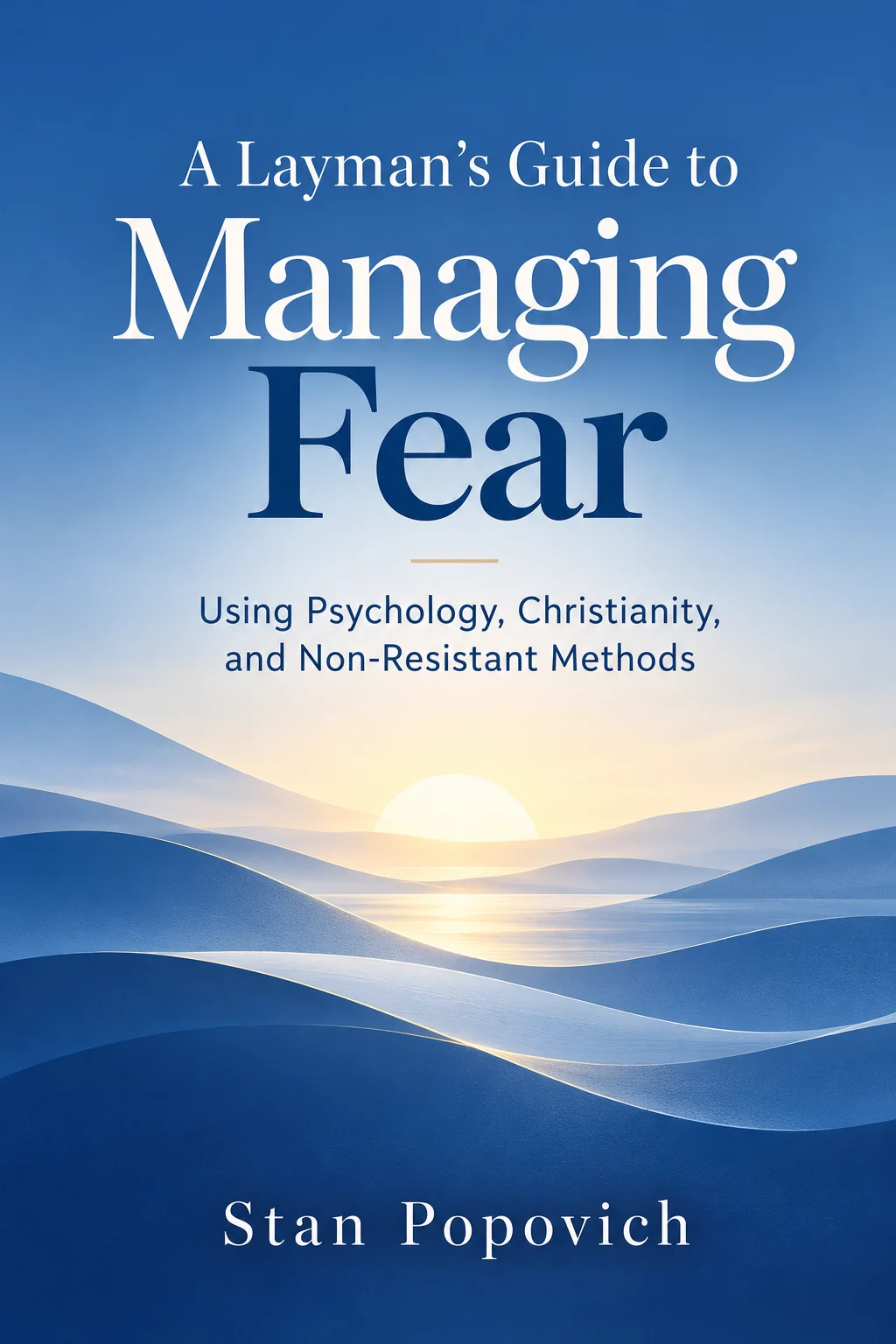
A Layman’s Guide to Managing Fear has 200+ practical strategies for fear, worry and anxiety.
Get the book · $9.99Fear Keeps Returning During Everyday Situations
Someone may successfully manage fear in one situation but notice the same anxious feelings returning in other parts of life. For example, a person may feel anxious before a work meeting, then experience similar fears before making a phone call or attending a social event. Instead of assuming that the fear means something is wrong, they can notice the pattern and use practical strategies such as focusing on the facts, slowing their breathing, and breaking each situation into smaller steps. The goal is not to eliminate every fearful feeling but to learn how to respond when fear returns.
Fear of Flying Makes Air Travel Difficult
A person who is afraid of flying may begin worrying days or weeks before a scheduled flight. They may imagine something going wrong, experience physical symptoms of anxiety, or consider avoiding the trip altogether. One approach is to prepare for the flight while focusing on what can actually be controlled. The person might learn more about the flying process, practice slow breathing, visualize getting through the flight successfully, and take the experience one step at a time. Gradually facing the situation rather than relying entirely on avoidance can help the person develop greater confidence.
Fear Gets Stronger When Avoidance Becomes a Pattern
Someone may notice that a fear is becoming more difficult to manage because they continue avoiding the situations that trigger it. For example, a person who becomes anxious about driving may first avoid long trips, then begin avoiding unfamiliar roads, and eventually avoid driving whenever possible. As their world becomes smaller, the fear may seem even more powerful. They can begin reversing this pattern by identifying a small, manageable step and gradually working toward more difficult situations. Focusing on one step at a time, using calming techniques, and seeking support when needed can make the process more manageable.
My Personal Experience
I have lived with fear and anxiety for more than 20 years, and I have learned that persistent fear can be challenging, especially when it returns after you thought you had moved past it. However, fear returning does not mean I have lost all my progress.
For example, I worried about losing my job after some of my friends were laid off. At first, I tried to stay positive and read affirmations when I felt anxious. About a month later, my fear returned, so I decided to take classes to update my skills.
Although I still had concerns, taking practical steps helped me feel more prepared and less nervous. This experience taught me that taking action may not eliminate fear, but it can help me manage my worries. I also learned that progress takes time, even when uncertainty remains.
If you or someone you know is in crisis in the U.S., call or text 988 to reach the 988 Suicide & Crisis Lifeline, available 24/7. This article is educational and is not a substitute for professional care.
Stan is the author of A Layman’s Guide to Managing Fear and the creator of the Managing Fear Framework. He has lived with anxiety for more than 20 years and has been featured on 30+ TV and radio programs.
More about Stan →