How to Stop Worrying So Much: Practical Strategies
Stop worrying by challenging negative thoughts and building resilience.


How Can You Stop Worrying So Much?
You can reduce excessive worry by learning to recognize anxious thoughts, challenge unrealistic fears, focus on what you can control, and practice healthier responses to uncertainty. Strategies such as mindfulness, constructive self-talk, problem-solving, and gradually facing fears can help calm your mind and reduce the cycle of constant worrying.
What Is Worry and Why Does It Happen?
Worry happens when your mind treats future possibilities as immediate threats. It creates “what-if” scenarios that trigger tension, alertness, and mental overdrive.
Occasional worry is normal. Persistent worry, however, can interfere with daily life: tightening your muscles, disrupting sleep, affecting concentration, and draining emotional energy.
According to the National Institute of Mental Health (NIMH), anxiety can involve feelings of fear, dread, or uneasiness and may occur when a person anticipates a future concern or threat. Persistent or excessive anxiety can interfere with daily activities and overall well-being.
Before learning how to manage worry, it helps to recognize the common thinking patterns that fuel it.
What Are Common Types of Negative Thinking?
Negative thinking patterns can affect how you view yourself, other people, and everyday situations. Learning to recognize these patterns can help you challenge unhelpful thoughts and develop a more balanced perspective.
1. All-or-Nothing Thinking: Looking at things in black-or-white categories, with no middle ground. “If everything is not perfect, I’m a failure.”
2. Overgeneralization: Generalizing from a single negative experience, expecting it to hold true forever. “I didn’t get hired for the job. I’ll never get any job.”
3. Mental Filtering: Focusing on the negatives while filtering out the positives. Noticing the one thing that went wrong, rather than all the things that went right. “I got one question wrong. That doesn’t define me.”
4. Discounting the Positive: Coming up with reasons why positive events don’t count. “I did well on the presentation, but that was just dumb luck.”
5. Jumping to Conclusions: Making negative interpretations without actual evidence. You act like a mind reader: “I can tell she secretly hates me.” Or a fortune teller: “I just know something terrible is going to happen.”
6. Catastrophizing: Expecting the worst-case scenario to happen. “The pilot said we’re in for some turbulence. The plane’s going to crash!”
7. Emotional Reasoning: Believing that the way you feel reflects reality. “I feel like such a fool. Everyone must be laughing at me.”
8. “Should” Statements: Holding yourself to a strict list of what you should and shouldn’t do and beating yourself up if you break any of the rules.
9. Labeling: Criticizing yourself based on mistakes and perceived shortcomings. “I’m a failure; I’m boring; I deserve to be alone. I wouldn’t be able to manage a pet.”
10. Personalization: Assuming responsibility for things that are outside your control. “It’s my fault my son got in an accident. I should have warned him to drive carefully in the rain.”
How Can You Manage Negative Thoughts and Reduce Worry?
Do you often see the world as more threatening than it really is? You might notice yourself overestimating risks, jumping to worst-case scenarios, or treating anxious thoughts as facts.
By recognizing when your mind is exaggerating danger, challenging negative assumptions, and practicing healthier ways of thinking, you can reduce anxiety, feel more in control, and approach situations with clarity and confidence.
1. Identify triggers: Identifying the triggers and patterns of “what-if” thoughts can be a crucial step in managing anxiety. These thoughts revolve around common topics such as financial concerns, relationships, health, and the future. Recognizing these patterns can help you understand when you’re most likely to fall into the trap of “what-if” thinking.
2. Notice the thought: To identify worrisome thoughts, pay attention to when you feel anxious or stressed, and notice if you’re repeatedly thinking about potential negative outcomes or “what-if” scenarios.
3. Challenge the thought: When “what-if” thinking sets in, you might start making up scenarios that aren’t true. When a “what-if” thought comes, ask yourself how likely it is to happen and if your worry is based on facts or assumptions. Ask yourself if there is concrete evidence to support the thought and focus on the facts of the situation.
4. Check reality: Compare your thoughts to reality. The worst-case scenario doesn’t usually happen. Look at your past experiences and see if there is any evidence that your fears may come true. Ask yourself how you handled your stressful situations in the past.
5. Seek different perspectives: Discuss your worries with someone you trust and who can offer a different perspective on how to view things. See the situation from various points of view and think about other possible interpretations rather than immediately jumping to the worst-case scenario.
6. Reframe the thought: Replace the negative thought with a more balanced and realistic one. Instead of dwelling on “what-if,” rephrase the thought with “if this happens, then I will do this.” Develop a plan on how you can handle the current situation.
Why Does Uncertainty Lead to Catastrophic Thinking?
Uncertainty can feel overwhelming for anyone with anxiety or OCD. Everyday unknowns—like decisions, changes, or waiting for results—can feel threatening because anxiety exaggerates risk, turning small uncertainties into urgent or dangerous scenarios. A common response is catastrophic thinking, where the mind jumps straight to the worst-case outcome and often loops repeatedly, even without evidence.
Noticing these patterns and labeling your thoughts—such as saying, “This is my anxiety predicting disaster, not reality”—creates mental distance. Over time, this practice helps your brain respond with less fear, making uncertainty easier to tolerate. By combining awareness with strategies like checking evidence and pausing before reacting, you can gradually weaken catastrophic thoughts and regain a sense of control.
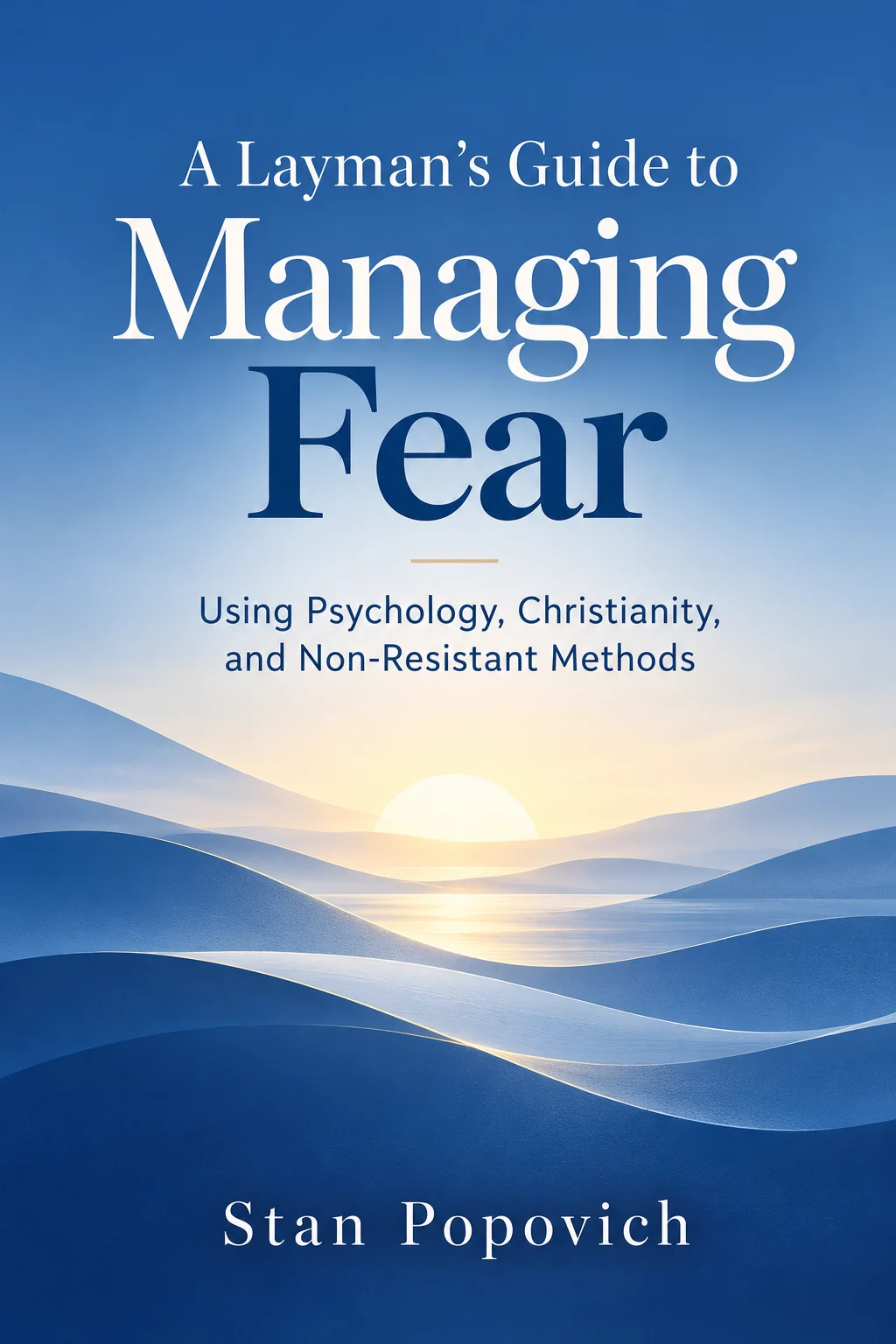
A Layman’s Guide to Managing Fear has 200+ practical strategies for fear, worry and anxiety.
Get the book · $9.99How Can You Tell When Anxiety Is Exaggerating Risk?
Anxiety can make situations seem more dangerous or threatening than they really are. The following signs can help you identify anxiety-driven thinking.
1. The thought predicts catastrophe:Anxiety-driven thoughts often jump straight to the worst-case scenario. Examples include “If X happens, everything will fall apart,” “If I don’t plan perfectly, I’ll fail completely,” or “If I don’t sleep, I’ll spiral out of control.” These thoughts are extreme and future-focused, often ignoring realistic outcomes.
2. The thought feels urgent:Exaggerated thoughts create a strong pressure to act immediately, such as feeling “I have to act now or disaster will happen” or “I can’t tolerate this uncertainty.” This sense of urgency is a hallmark of anxiety-driven thinking and can make it difficult to pause or evaluate the situation calmly.
3. Physical or emotional alarm:Strong bodily or emotional reactions often accompany these thoughts. You might notice a racing heart, tense muscles, shallow breathing, irritability, panic, or a sense of dread. Sometimes, you feel “frozen” or compelled to act—planning, checking, or monitoring. Often, the intensity of the reaction is far greater than the actual risk.
4. Repetitive and sticky thinking:Anxiety-driven thinking tends to loop endlessly. You may replay “what-if” scenarios, repeatedly check or plan, and find that logic or reassurance does little to resolve the thoughts. Unlike normal problem-solving, which ends once action is taken, exaggerated thoughts trap you in a continuous mental loop.
5. Thought vs. evidence mismatch:Compare your thought to reality. Ask yourself, “Has this worst-case scenario actually happened before?” or “Even if it did, could I survive it?” If the thought is far worse than the evidence suggests, it is likely an exaggeration rather than a true prediction.
6. Label thoughts to create distance:Once you recognize the pattern, label the thought explicitly: “I’m noticing the thought that something terrible will happen. This is my anxiety predicting disaster, not reality.” This simple step creates psychological distance, helping your brain respond more rationally instead of reacting automatically.
Practicing these steps consistently can weaken catastrophic thoughts. The goal isn’t to eliminate anxiety, but to notice exaggerations and respond more calmly. Over time, labeling thoughts, checking evidence, and creating mental distance helps break the worry cycle and regain a sense of control.
What Are the Best Ways to Manage Ongoing Worry?
Learning practical ways to manage your worries can help you feel calmer, focus on what you can control, and handle life’s challenges more effectively. The following ten strategies can help you manage ongoing worry and improve your overall well-being.
1. Practice mindfulness: Focus on the present moment by practicing breathing, meditation, or observing your thoughts without judgment.
2. Use constructive self-talk: Replace negative “what-if” thoughts with positive affirmations about your ability to handle situations. Focus on what you can control, rather than dwelling on potential outcomes.
3. Practice self-care: Self-care is an important strategy for managing anxious worry and improving your overall well-being. This can include activities such as getting quality sleep, staying active, eating a healthy diet, engaging in hobbies or activities you enjoy, and taking breaks to relax and recharge.
4. Find solutions: Set a specific time to write down your worries and try to find solutions. Get the facts regarding your circumstances by talking to others and doing some research.
5. Deep breathing: Find a quiet and comfortable place to sit or lie down. Close your eyes and take a few deep breaths. Focus on letting go of tension and feeling calm.
6. Try journaling: Writing down your thoughts and feelings can help a person express their feelings and channel their thoughts in a more positive direction.
7. Practice guided imagery: Think of a place or thing that brings you comfort and picture it in your mind. Take deep breaths and try to relax. When you are ready, slowly open your eyes and return to the present moment.
8. Practice gratitude: Focus on what you’re thankful for and the good things in your life. Write down your accomplishments in a small notebook you can carry with you.
9. Connect with others: Reach out to friends, family, or a support group. Ask for their opinions and suggestions on how to handle your current situation.
10. Get some help: Talk to a mental health counselor on how to manage your worry, anxieties, and addictions. Your doctor will be able to give you some referrals.
How Can You Handle Anxiety in New Situations?
Handling anxiety in new situations can be challenging, especially when you are unsure what to expect. One way to manage these feelings is to prepare ahead of time, focus on what you can control, and take things one step at a time.
Remind yourself that it is normal to feel nervous when trying something unfamiliar, and you do not have to do everything perfectly. Taking slow breaths, using positive self-talk, and focusing on the present moment can help you stay calm.
How Can You Take Control of “What-If” Thoughts?
Your brain is wired to detect threats, so when it encounters uncertainty, it automatically activates alertness and mental scanning. That’s why telling yourself to “just stop worrying” rarely works. Instead of trying to suppress anxious thoughts, it’s more effective to respond to them with structure. A practical way to regain control is to write down the specific worry, estimate its realistic probability, and assess its potential impact.
Next, decide whether the situation requires action or simply awareness, and schedule time to revisit it during your daily worry window. Over time, this structured process retrains your brain to treat worry as information rather than an emergency. Instead of becoming a constant mental drain, worry becomes organized and manageable, allowing you to respond with clarity instead of reacting from fear.
What Practical Steps Can Reduce Everyday Stress?
Managing stress is easier when you focus on small, actionable steps. Break big tasks into smaller pieces, like packing one box at a time or attending orientation gradually. Limit constant checking of emails, messages, or updates, and prepare early for holidays, deadlines, or seasonal events with checklists.
Keep essentials like wallets, keys, and phones in a dedicated spot, and practice time management by setting alarms, leaving early, and allowing travel buffers. After conversations, briefly reflect and redirect your focus to avoid overthinking, and focus on what you can control, accepting that some outcomes—like test results or job decisions—are beyond your influence.
My Personal Experience
I have lived with fear and anxiety for more than 20 years, and I have learned that constant worrying can make difficult situations feel overwhelming. In my experience, recognizing worst-case scenarios helps me avoid getting carried away by fearful thoughts.
For example, when I attended Penn State, I worried that if I did not get all A’s in my classes, I would fail and have to leave the university. This possibility frightened me, and I became very concerned about what might happen.
I reminded myself that I did not need all A’s to pass my classes and that other outcomes were possible. I learned that focusing on available choices and opportunities was more helpful than assuming the worst would happen. In reality, I did not need all A’s to pass.
If you or someone you know is in crisis in the U.S., call or text 988 to reach the 988 Suicide & Crisis Lifeline, available 24/7. This article is educational and is not a substitute for professional care.
Stan is the author of A Layman’s Guide to Managing Fear and the creator of the Managing Fear Framework. He has lived with anxiety for more than 20 years and has been featured on 30+ TV and radio programs.
More about Stan →